



Seventeenth Century Crafts King Solomon's Beer Mug
This beer mug depicting the Queen of Sheba and King Solomon was made in Königsberg (Königsberg) between 1686 and 1689 by Schwerdfeger nigsberg. The Queen of Shabba visits King Solomon. The main body of the beer glass is a double-layered, smooth cylindrical container covered with a shell decorated with relief, showing the scene of the Queen of Sheba in front of King Solomon. The Queen's entourage can be seen in the background, including men wearing ancient armor, women camels carrying gifts, and the Queen of Sheba kneeling before King Solomon.
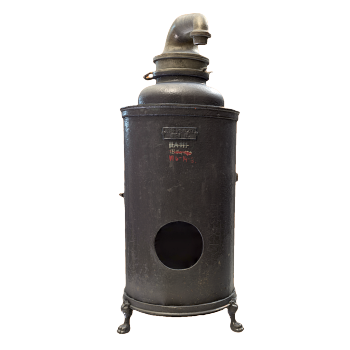
Old style distiller
The old-fashioned gas heating and distillation device collected in the Jagiellonian University Museum.

Beijing carved lacquer wooden box - Yagailong University Museum
Beijing carved lacquer craftsmanship, as one of the "Three Treasures" of Chinese arts and crafts, is renowned alongside Hunan embroidery and Jingdezhen porcelain in Jiangxi for its unique skills and exquisite carving. The art of carved lacquer originated in Yunnan and Sichuan in southern China and was widely known during the Tang and Song dynasties. In the Yuan Dynasty (1271-1368), it was introduced to Beijing, and many skilled craftsmen in lacquer carving migrated here as Beijing became the capital. The Jagiellonian University Museum houses a carved lacquer box from the Qianlong period of the Qing Dynasty, which embodies the exquisite craftsmanship and pursuit of beauty of royal workshops in the Qing Dynasty. It is a precious heritage of traditional Chinese arts and crafts.

Astronomical pentameter in the first half of the 19th century
Built by artist Joseph von Utzschner in the first half of the 19th century, this instrument is an observational astronomical device used to determine the height of celestial bodies above the horizon. It consists of a frame limited by two radii, an arc with a scale, an observation telescope, and a mirror system. It is used to determine the position of celestial bodies by using a mirror system that produces a reflection image of the observed object parallel to the horizon in the observer's field of view. In order to observe the position of the sun, a filter is used to limit the amount of light reaching the observer's eyes. The instrument is currently housed in the Jagiellonian University Museum in Munich, Germany.

Painted Porcelain Water Buffalo by Jacobs Adrien Halder

Popular Models
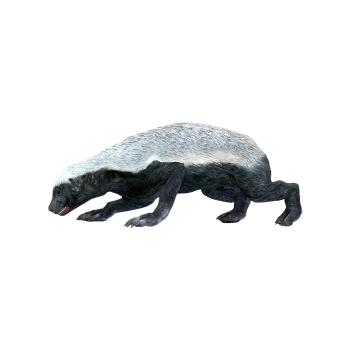
Honey Badger (3D animated model)
194 View
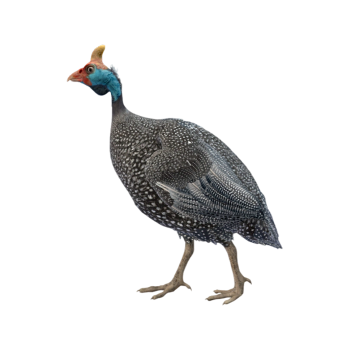
Guinea fowl (3D animated model)
165 View
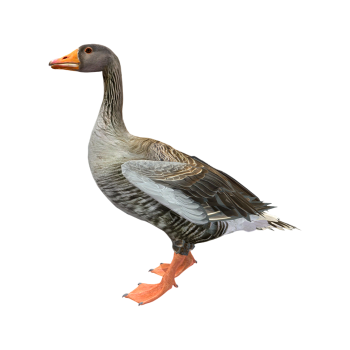
Wild Goose (3D animated model)
187 View
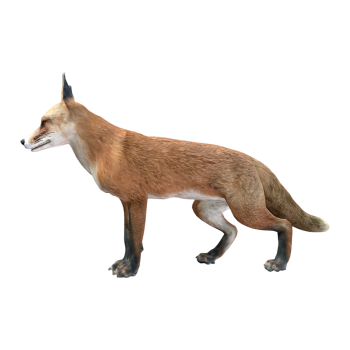
Red Fox (3D animated model)
155 View
Random Model


"Strange Things" intercom
1046 View
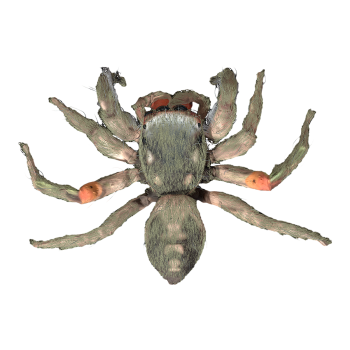
jumping spider
1501 View

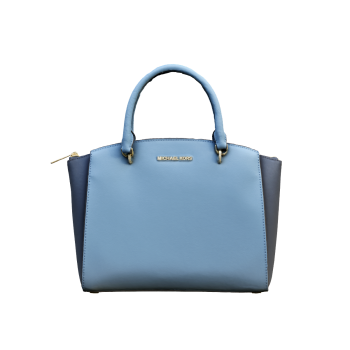
MichaelKors Blue Ladies Tote
803 View

Altp ö lla Cemetery Chapel
876 View
Russian Church
838 View
